Wear problems
Recurring contact can wear guides, sliders, rollers, bushings, and other equipment components.
Components for machine builders and integrators
Custom machined plastic parts for packaging machinery, assembly equipment, conveyor systems, inspection systems, and general automation projects, produced from drawings, CAD files, photos, or samples.
Common automation challenges
Automation component projects can begin with recurring wear, inconsistent movement, an unavailable replacement, or a new machine design. Share the information available for an engineering and manufacturing review.
Recurring contact can wear guides, sliders, rollers, bushings, and other equipment components.
Sliding behavior, mating surfaces, speed, and load should be reviewed when motion becomes inconsistent.
Prototype, first-part, and low-volume requirements can be evaluated without assuming a large production run.
Damaged or discontinued parts can be reviewed from drawings, dimensions, photographs, or available samples.
Operating conditions help narrow suitable plastics when the original material is unknown or no longer appropriate.
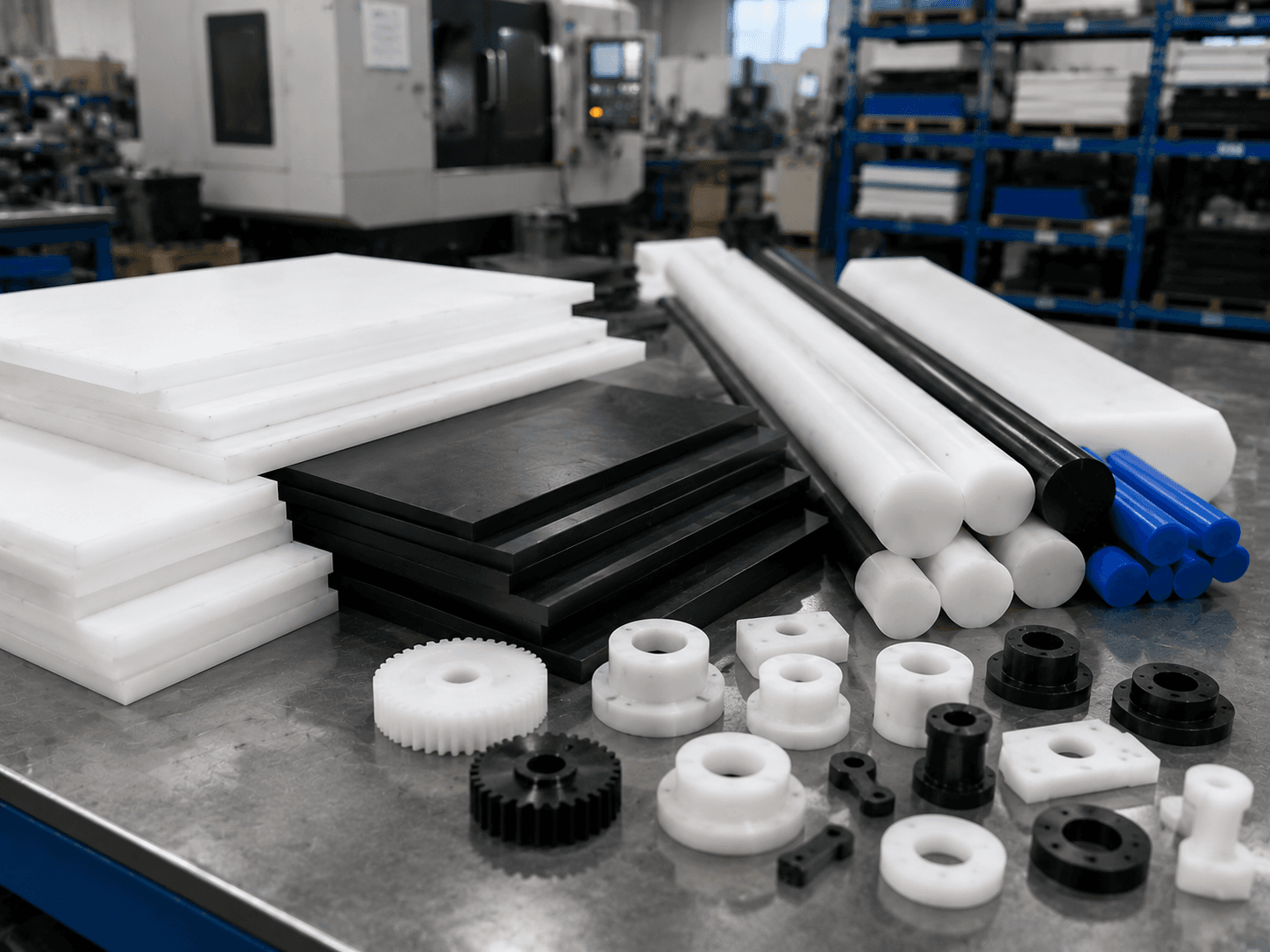
Components we supply
Part geometry, material, quantity, mating surfaces, mounting details, and equipment conditions are reviewed before production is confirmed.
Applications
The same component type can require different material and manufacturing decisions depending on motion, load, wear, environment, and equipment function.
Guides, change parts, supports, rollers, and fixtures for product handling and machine setup.
Positioning blocks, nests, spacers, and supports for assembly and production tooling.
Guide rails, wear strips, sliders, rollers, and transition components for material movement.
Fixtures, locating components, insulating parts, and protective covers for checking equipment.
Drawing-based plastic components for machine builders, integrators, maintenance teams, and OEM projects.
Materials by function
Material suitability should be reviewed against the complete operating environment rather than a component name alone.
Often evaluated for precision fixtures, positioning blocks, bushings, spacers, and moving components.
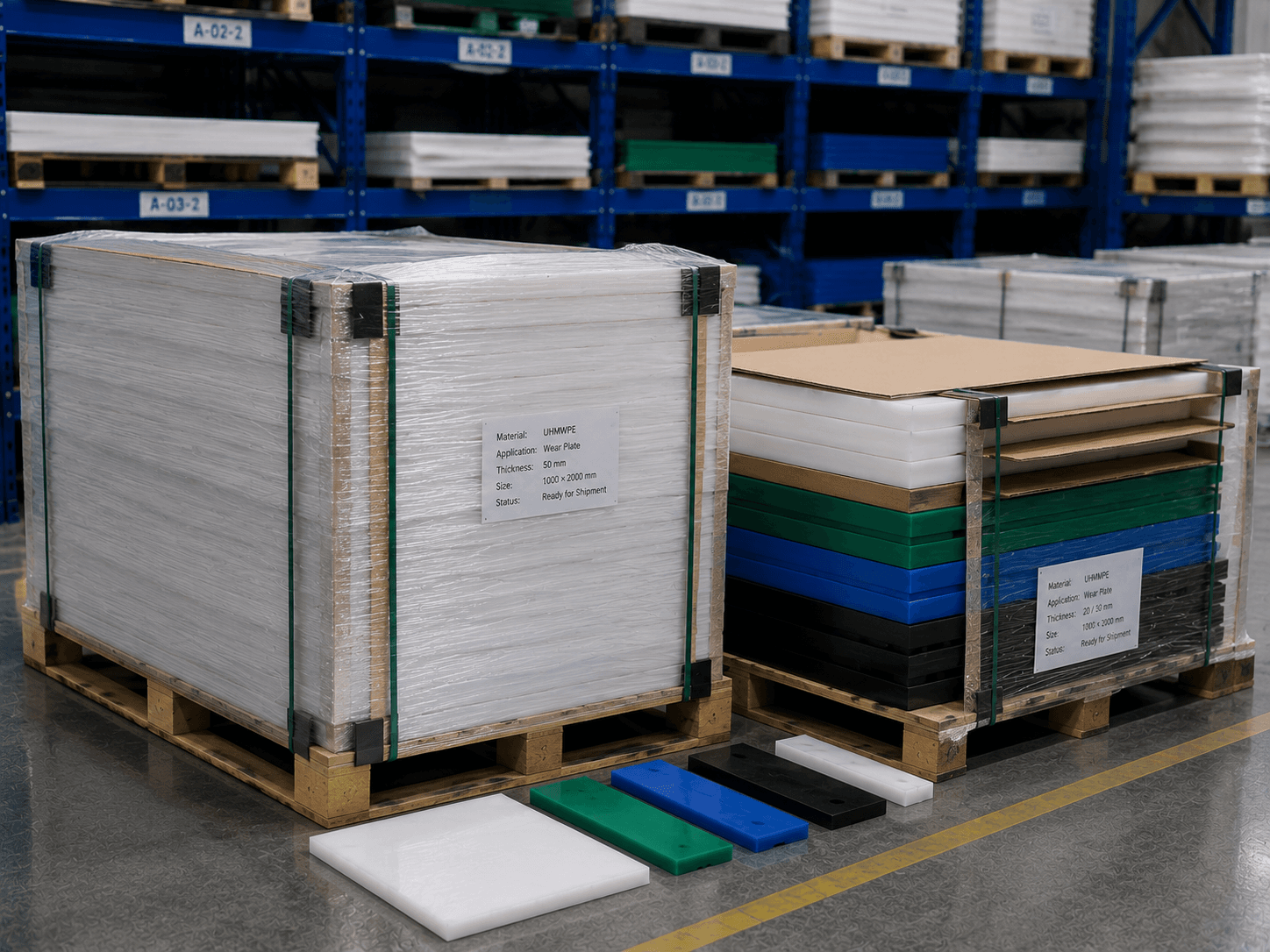
Review materialCommonly considered for guide rails, wear strips, sliders, liners, and low-friction contact surfaces.
Review materialUsed for rollers, wheels, bushings, gears, and load-supporting components when the application is suitable.
Review materialA practical option for machine covers, guards, windows, and impact-resistant protective components.
Review materialReviewed for demanding components involving temperature, chemical, electrical, or dimensional requirements.
Review materialConsidered for low-friction, chemical exposure, sealing, and electrical insulation applications.
Review materialManufacturing support
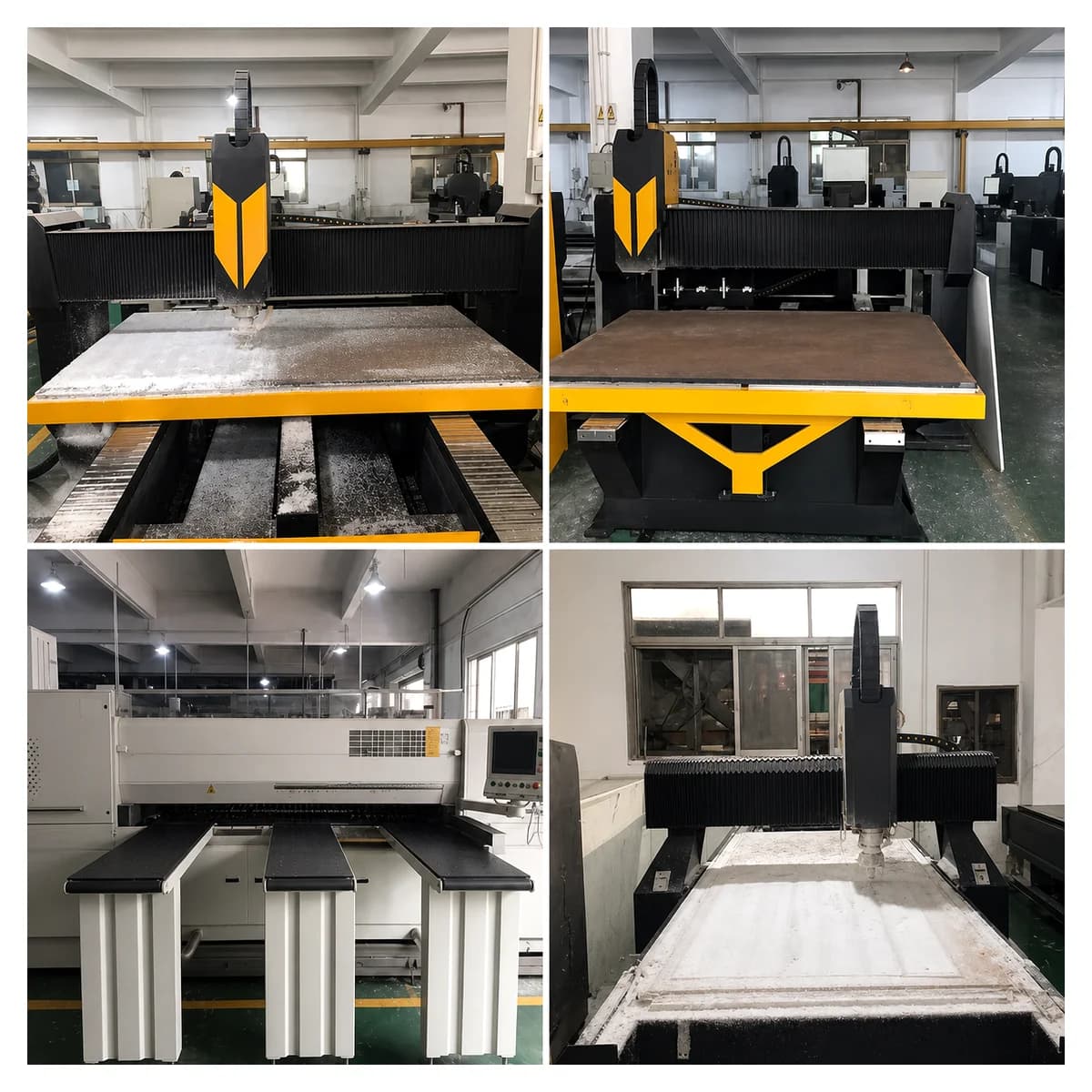
The review process can begin with complete CAD data or with the best information available from an existing component.
Dimensioned drawings help identify interfaces, critical features, material notes, and inspection needs.
STEP and other available 3D files can support geometry review and manufacturing preparation.
Marked photographs, measurements, sketches, or samples can help start projects without complete CAD data.
Prototype and first-part requirements can be reviewed before repeat production is considered.
Small production quantities can be evaluated against material stock, geometry, and process requirements.
Confirmed drawings and project requirements can support recurring production and replacement needs.
Quote requirements
Incomplete information is acceptable for the first discussion. More detail helps clarify material, process, inspection scope, and quotation assumptions.
Send the best technical reference available, even when the original drawing is missing.
Describe what the component guides, supports, insulates, protects, locates, or replaces.
Include the requested grade or share operating conditions when material selection support is needed.
Provide overall size, mounting interfaces, mating features, and project-specific critical dimensions.
State prototype, first-part, low-volume, repeat-order, or estimated annual requirements.
Share load, motion, wear, temperature, moisture, chemicals, electrical needs, and equipment environment.
Inspection and documentation
Inspection scope and documentation should match the component function, drawing, selected material, and agreed quotation requirements.
Availability of specific records or reports depends on the material source, drawing requirements, and quotation scope confirmed for the project.
FAQ
Practical answers for machine builders, integrators, maintenance teams, engineers, and industrial buyers.
Apex PolyWorks can review fixtures, positioning blocks, guide rails, sliders, bushings, rollers, spacers, supports, covers, and other drawing-based plastic components. Manufacturing feasibility depends on the geometry, material, dimensions, quantity, and application requirements.
Yes. Send a dimensioned drawing or available CAD file together with the material, quantity, operating conditions, and inspection requirements. The project is reviewed before the manufacturing route and quotation scope are confirmed.
Marked photographs, sketches, dimensions, equipment information, or an existing sample can help begin the review. Additional measurements or a confirmed production drawing may be required before manufacturing.
POM, UHMWPE, nylon, polycarbonate, PEEK, and PTFE are among the materials often reviewed. The appropriate choice depends on part function, load, motion, wear, temperature, chemicals, moisture, electrical requirements, and documentation needs.
Prototype, first-part, and low-volume requirements can be reviewed. Material availability, part size, geometry, process, and inspection scope determine the practical production option.
Replacement components can be reviewed using drawings, dimensions, photographs, sketches, or samples. Functional interfaces and operating conditions should be documented before the replacement design is confirmed.
Provide the available drawing, CAD file, photograph, or sample information; part function; material or operating conditions; dimensions; quantity; inspection needs; and delivery destination.
Inspection and documentation are reviewed by project. Material records and dimensional inspection reports may be available depending on the selected material, source records, drawing requirements, and agreed quotation scope.
Related support
Review machining capability, replacement-part support, or material-specific wear components before sending the RFQ.
Review milling, turning, prototype, low-volume, and repeat-production support.
Start with drawings, photographs, measurements, sketches, or an existing sample.
Explore wear strips, guide rails, liners, slide plates, and conveyor components.